
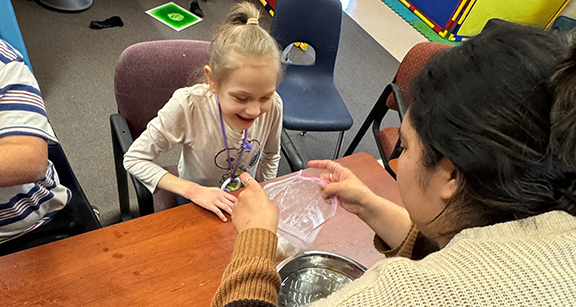
Elementary students at the Wayne D. Boshears Center are exploring the wonders of science through hands-on learning experiences in Special Education Teacher Erika Johnson’s classroom. During the month of January, students focused on an engaging unit about Arctic animals and how they survive in some of the coldest environments on Earth. Through interactive lessons, students learned that many Arctic animals have a special layer of fat called blubber, which provides insulation and helps keep them warm in freezing temperatures.
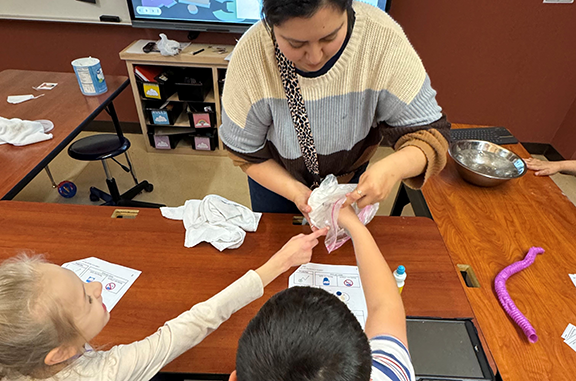
To help students better understand this important adaptation, Ms. Johnson guided them through a memorable hands-on experiment. One hand of the students was coated with shortening to represent blubber, while the other hand was left uncoated. Students then placed both hands into a bowl of ice water and observed how each hand felt. This simple yet powerful activity allowed students to experience firsthand how blubber helps protect animals from the cold.
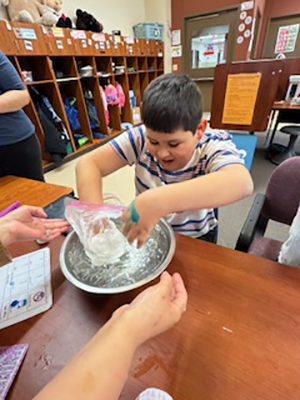
The experiment encouraged active participation, sensory exploration, and thoughtful observation. Students were able to compare their experiences, share reactions, and connect the experiment to the survival of Arctic animals such as polar bears, seals, and whales. Activities like this support student engagement while strengthening understanding of science concepts in a meaningful and accessible way.
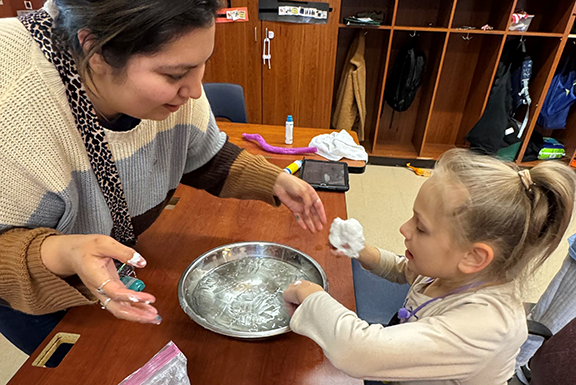
By incorporating hands-on experiments and real-world connections, the class continues to build curiosity, critical thinking skills, and a deeper appreciation for the natural world. Learning experiences like these help make science both exciting and memorable for Wayne D. Boshears Center students.